– The U.S.–China Retaliation Spiral and Implications for Japan and JBIC Projects –
Wrote By:Global Economist 2025/10
1. Overview
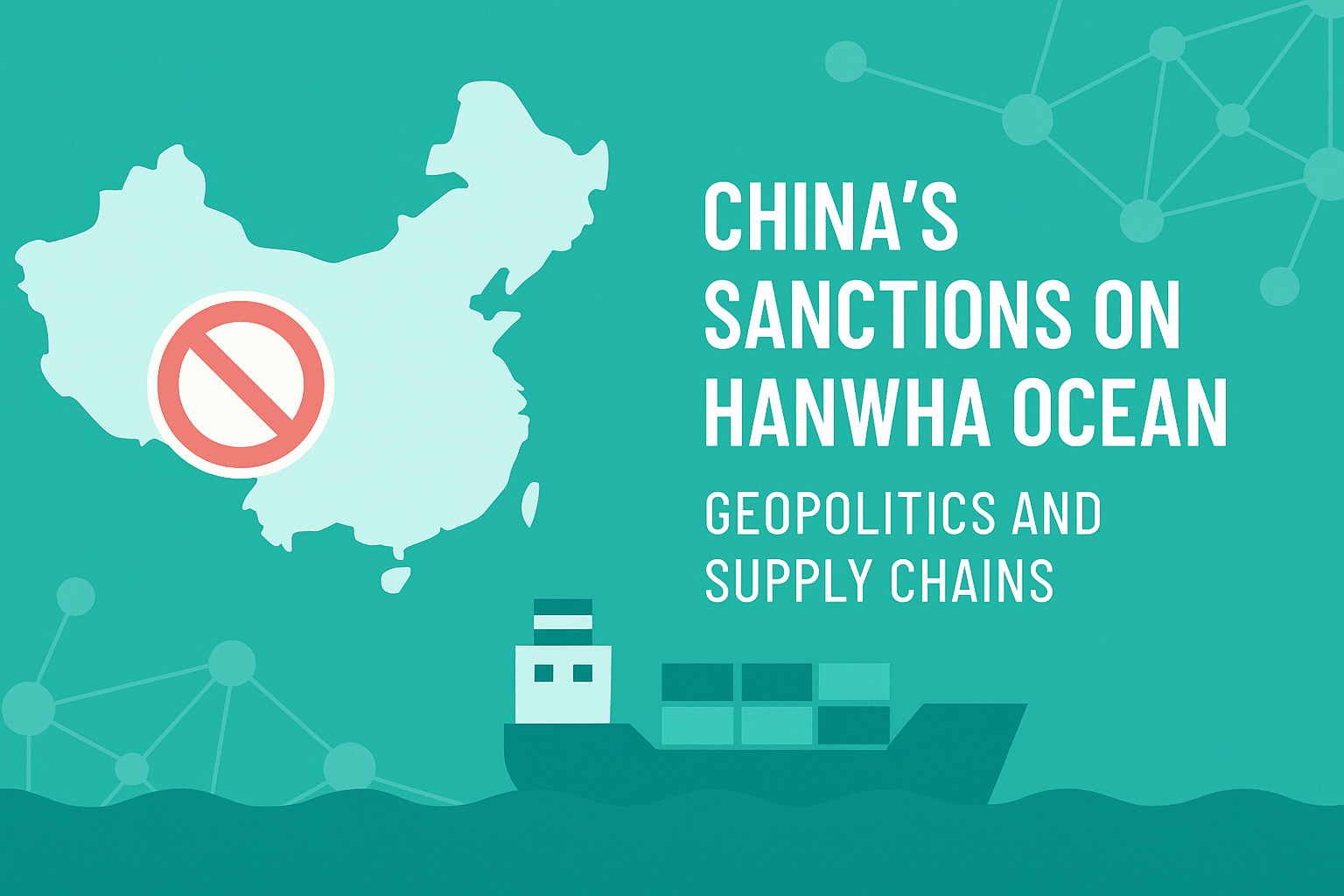
On October 14, 2025, China’s Ministry of Commerce imposed sanctions on five U.S.-based subsidiaries of South Korea’s Hanwha Ocean (formerly Daewoo Shipbuilding & Marine Engineering, DSME). The sanctions prohibit Chinese companies and individuals from conducting business with these entities and may restrict Hanwha Ocean’s assets and revenue streams within China. This action represents a new phase in the escalating U.S.–China trade confrontation, particularly impacting civilian shipbuilding and defense-related industries.
2. Structure and Background of the Sanctions
Hanwha Ocean operates several U.S. subsidiaries, including Hanwha Philly Shipyard, which is engaged in U.S. Navy repair work and civilian LNG carrier construction. The recent sanctions were introduced in retaliation for Washington’s new port fees and export control measures against Chinese firms. Although the direct targets are U.S. subsidiaries, the sanctions are expected to affect Hanwha Ocean’s parent company and global supply chain.
This move underscores the intensifying competition between the U.S. and China for dominance in strategic industries—shipbuilding, logistics, resources, and defense. South Korean firms, such as Hanwha, are now exposed to a dual-pressure environment where compliance with both U.S. and Chinese restrictions has become increasingly complex.
3. Concrete Impacts of the Sanctions
(1) Supply Chain Disruptions
The sanctioned entities face restrictions on the use of Chinese-origin materials, equipment, and engineering services. LNG and naval ship projects relying on such inputs will require alternative sourcing, leading to cost escalation and schedule delays.
(2) Financial and Contractual Risks
Financial institutions and insurers may tighten risk exposure, increasing borrowing costs and altering credit terms. Contractual clauses related to sanctions, force majeure, and supplier representations will likely be revisited to ensure compliance and mitigate exposure to secondary sanctions.
(3) Overlapping Risks with Russia-related Sanctions
Hanwha Ocean’s involvement in the Arctic LNG 2 project—already under U.S. and EU sanctions—compounds its exposure. The company now faces dual regulatory risks from both Western and Chinese measures, complicating operational and legal risk management across jurisdictions.
4. Spillover Effects on Japanese Firms and JBIC Projects
Japanese corporations and JBIC-backed projects in shipbuilding, maritime transport, LNG, and energy logistics face several emerging risks:
- Rising Procurement Costs: Projects involving U.S. or Korean shipyards that use Chinese-origin components will experience increased material costs and possible delivery delays.
- Contractual Revisions: Companies must clarify whether sanctions constitute force majeure events and ensure that comprehensive sanction clauses are incorporated into all international agreements.
- Financing and Guarantee Risks: JBIC loans and guarantees involving entities listed under sanctions may require reassessment of disbursement conditions, guarantee coverage, and compliance standards.
5. Outlook
The extension of U.S.–China confrontation into the shipbuilding, port, and maritime logistics sectors signals a structural deepening of “supply-chain geopolitics.” While the practical impact of Chinese sanctions remains limited in the short term, the precedent of penalizing third-country firms represents a warning sign for global manufacturers and financial institutions. As G7 nations strengthen their coordination on export controls and as resource constraints intensify due to conflicts involving Russia and the Middle East, shipbuilding and defense-related supply chains will increasingly be categorized as high-risk domains.
6. Recommendations for Japanese Corporations and JBIC
- Conduct Immediate Supply Chain Mapping: Identify all suppliers and sub-contractors linked to the U.S., South Korea, China, or Russia, and assess exposure to sanction regimes.
- Reinforce Contractual Clauses: Update sanctions, force majeure, and KYC clauses in line with international compliance standards.
- Secure Alternative Suppliers: Prioritize diversification toward ASEAN, European, and Japanese component manufacturers.
- Utilize Political Risk Insurance: Incorporate coverage from Banker, and other institutions to mitigate financing and operational exposure.
- Establish Continuous Monitoring: Implement a permanent geopolitical risk monitoring system focusing on sanctions, export control, and financial regulation developments.
7. Conclusion
China’s sanctions on Hanwha Ocean mark the first direct spillover of U.S.–China retaliation into the civilian shipbuilding and maritime defense sectors. The resulting supply chain fragmentation risk now transcends traditional trade disputes, demanding comprehensive risk management from Japanese firms, lenders, and government-backed financiers. Similar retaliatory patterns are likely to emerge in other strategic industries—semiconductors, energy, and telecommunications—necessitating sustained geopolitical monitoring and proactive mitigation frameworks.