(Also known as the “Trump–Putin Tunnel Project”)
🕊 Introduction
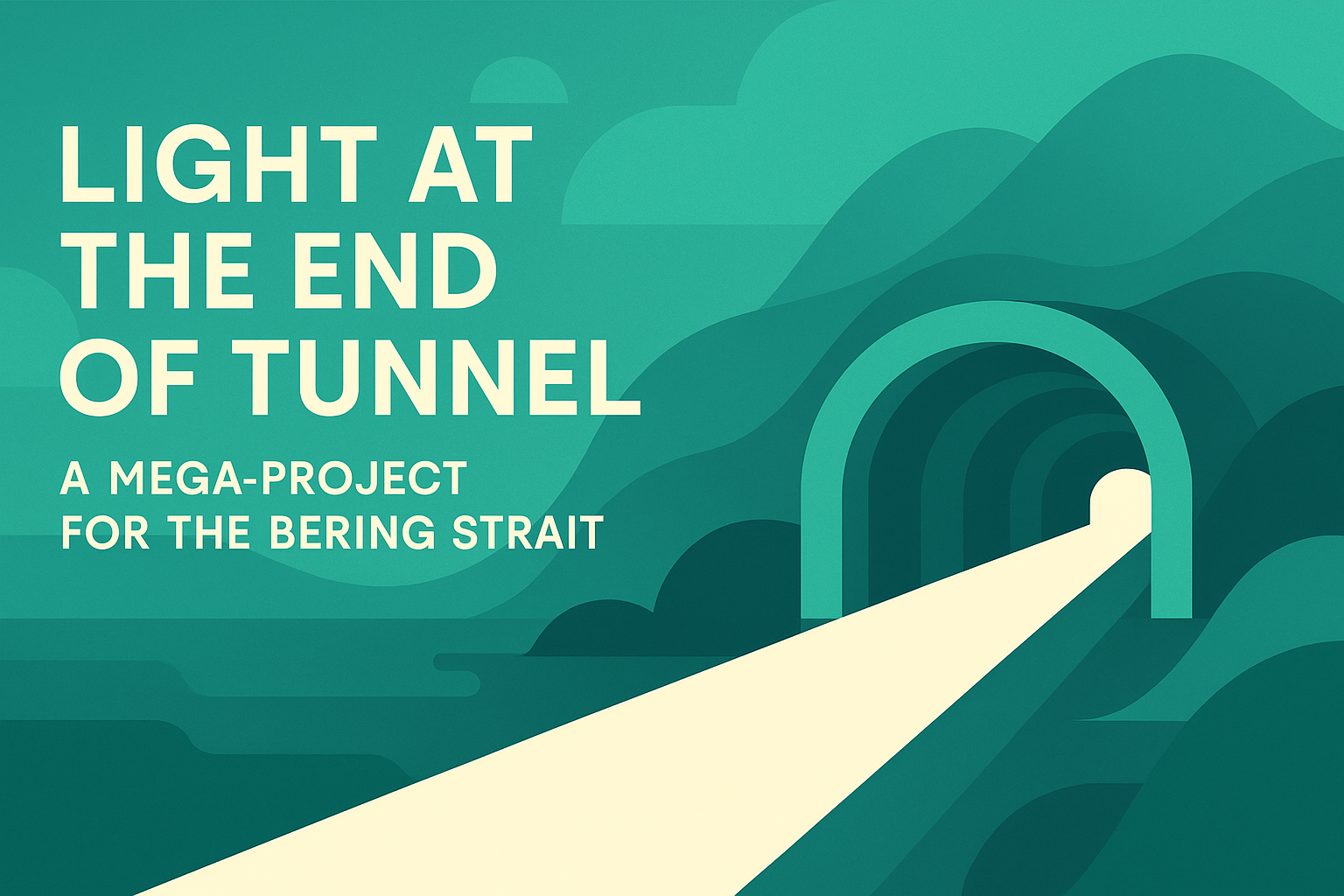
The phrase “Light at the end of the tunnel” carries a meaning far beyond physical construction.
In the frozen expanse of the Arctic—once a migration route between ancient civilizations—the Bering Strait has once again become the stage for an audacious idea: a symbolic bridge of cooperation between great powers and a vision of the future.
This report explores the Trump–Putin Tunnel Project, a proposed mega-infrastructure plan linking Russia and the United States, through the lenses of technology, geopolitics, economy, and environment.
🌍 Background and Concept Overview
The Bering Strait separates Russia’s Chukotka Peninsula and Alaska’s Seward Peninsula, only about 82 km apart at its narrowest point.
For centuries, it has inspired the dream of “connecting the continents”—a transcontinental route linking Eurasia and North America by rail, road, or tunnel.
Recently, a proposal resurfaced to construct a 70-mile (approximately 112 km) undersea railway tunnel—nicknamed the “Putin–Trump Tunnel.”
The project aims not only to connect landmasses but also to convey a symbolic message: a physical and political link between the Atlantic and Pacific, between Europe and America.
⚙️ Technical and Structural Considerations
1. Scale and Concept
Plans envision multiple parallel tunnels beneath the seafloor, integrating railways, roads, power cables, and fiber-optic networks into one combined corridor.
If realized, it would become one of the longest underwater tunnels in the world, representing a technological milestone of the century.
2. Geographic and Climatic Challenges
Though the strait’s depth is moderate, construction faces severe difficulties: permafrost, seismic zones, long periods of darkness, and extreme cold.
The Arctic environment would push the limits of engineering, logistics, and material endurance.
3. Infrastructure Connectivity
Both ends of the tunnel lie in remote, sparsely populated regions.
New access roads, ports, and railway links would need to be developed—effectively building a new industrial frontier from the ground up.
4. Cost and Construction Timeline
Initial estimates range from $80 billion to $100 billion, though some analyses predict higher totals if supporting infrastructure is included.
Even under optimal conditions, the project would take more than a decade to complete, demanding sustained political and financial commitment.
🌐 Geopolitical and Economic Significance
1. Revolution in Intercontinental Transport
A Bering Strait tunnel could create a continuous land-based connection from Europe to North America, reducing freight transit times and reshaping global supply chains.
It would open an alternative to maritime shipping and expand Arctic logistics potential.
2. A Symbol of Cooperation and Reconciliation
The project has been presented as a metaphor for transforming rivalry into collaboration—a “peace infrastructure” that embodies diplomacy through engineering.
The phrase “Light at the end of the tunnel” captures this spirit perfectly: passing through the darkness of division toward the dawn of cooperation.
3. Access to Emerging Markets and Resources
The Chukotka and Alaska regions possess vast untapped natural resources, from minerals to renewable energy potential.
The tunnel could catalyze new trade routes, Arctic development, and investment in remote northern economies.
⚠️ Key Challenges and Risks
Economic Feasibility — Limited population and economic activity along the route raise questions about demand and profitability.
Environmental Impact — The Arctic ecosystem and Indigenous communities require strict protection and inclusion in the planning process.
Security Concerns — Strategic infrastructure connecting two former adversaries must balance openness with national security.
Technical Realism — Extreme weather, logistical remoteness, and maintenance complexity make the project one of the toughest in human history.
✨ Meaning and “Light Beyond the Tunnel”
The “light” in this vision symbolizes more than connectivity—it represents the re-linking of humanity itself.
- 🌐 Global Integration: A unified Eurasia-North America route across the northern hemisphere
- 🤝 Symbol of Peace: Building bridges instead of walls
- 🔬 Technological and Environmental Model: A blueprint for carbon-neutral, Arctic-resilient infrastructure
- 🧭 Regional Revitalization: Unlocking new logistics, trade, and innovation zones in the polar regions
“Light at the end of the tunnel” thus becomes a metaphor for the transition from isolation and rivalry to cooperation and shared progress.