ー Sakhalin Dependence and Its Structural Risks for the 2026 Economy
Prepared from the perspective of a senior economist ー
- Executive Summary
- 1. Geopolitical Risk: Politicization of Energy and the Shift toward China
- 2. Maritime and Sanctions-Related Risks: Logistics under Higher Fragility
- 3. Contractual Governance Risks: Decline in Long-Term Contract Stability
- 4. Market Risk: Structural Rise in LNG Procurement Costs
- 5. Domestic Infrastructure Constraints: Hidden Costs of Supply Disruption
- 6. Macroeconomic and Industrial Implications for 2026
- 7. Scenarios for 2026 and Beyond
- Conclusion: Sakhalin Risk as the Central Axis of Japan’s Energy Security
Executive Summary
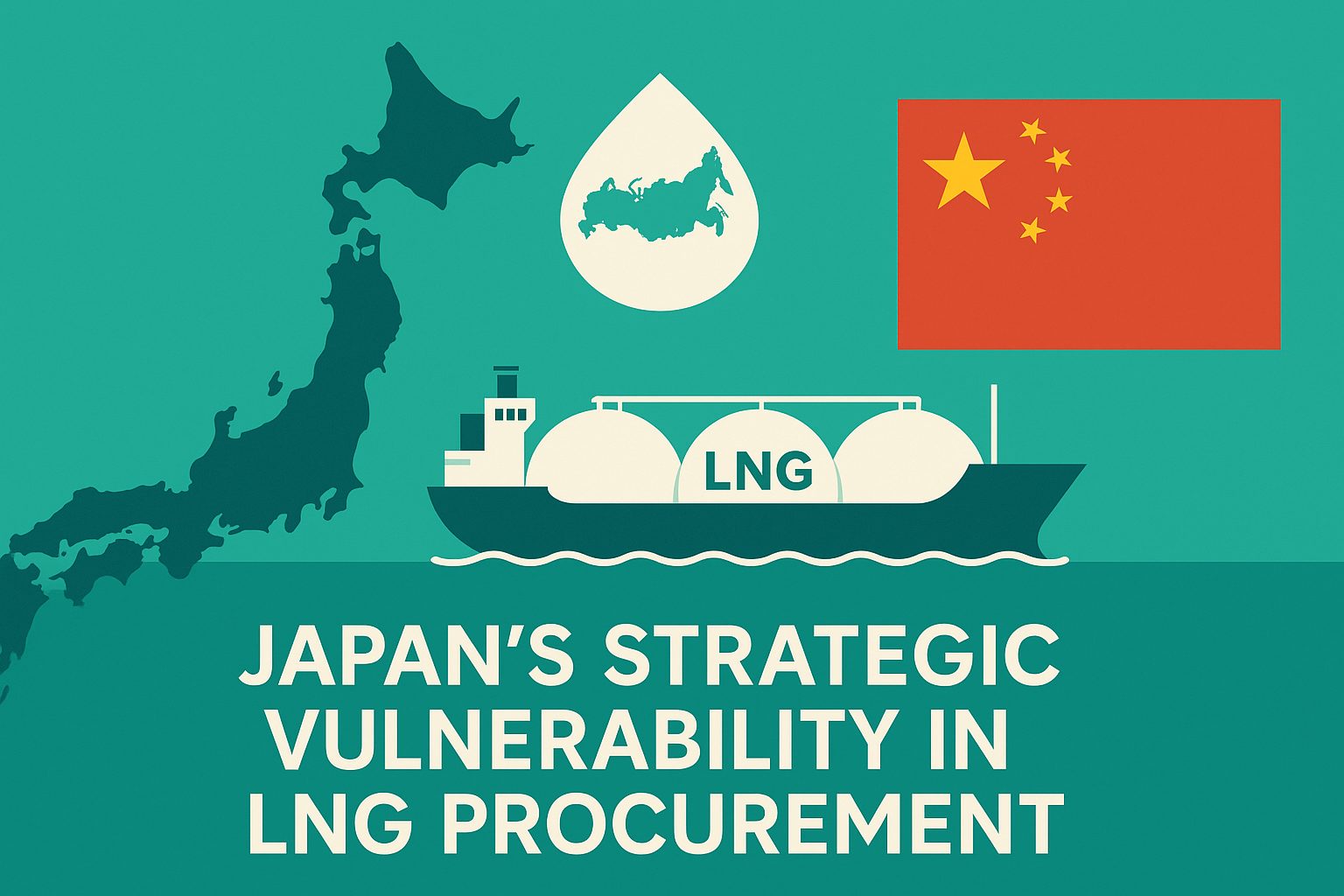
Although LNG from Russia’s Sakhalin-2 accounts for only about 8–10 percent of Japan’s total LNG imports, its strategic importance is vastly greater than the volume suggests. Sakhalin LNG is one of Japan’s cheapest and most logistically efficient supply sources. Its disruption would have disproportionate effects on electricity markets, industrial competitiveness, and overall macro stability.
Since 2022, Russia’s nationalization of Sakhalin-2, its politically motivated supply adjustments, and China’s expanding presence in the Russian energy sector have sharply increased uncertainty. Japan’s historical advantages—long-term contracts, stable pricing, and legal protections—are eroding. The result is rising exposure to geopolitical volatility, higher procurement costs, and reduced policy flexibility.
This report analyzes the structural risks of Japan’s dependence on Sakhalin LNG, highlighting the implications for energy security, industry, and the 2026 macroeconomic outlook.
1. Geopolitical Risk: Politicization of Energy and the Shift toward China
1-1 Russia’s use of energy as a geopolitical instrument
Following the Ukraine invasion, Russia increasingly uses hydrocarbons as leverage.
The termination of gas flows to Europe is an explicit precedent. A similar pattern is emerging in Asia: “friendly nations first, unfriendly nations later.” Japan, as a sanction-imposing country, sits on the vulnerable side.
1-2 Presidential decree and restructuring of Sakhalin-2
Russia’s 2022 decree transferred ownership of Sakhalin-2 to a new domestic operator.
Consequences include:
- unilateral renegotiation of contracts
- flexible adjustment of shipment volumes
- weakened legal protections for foreign investors
This framework allows Russia to alter supply conditions for Japan at any time.
1-3 China’s deeper involvement and Russia’s eastward energy strategy
China is now the centerpiece of Russia’s energy policy:
- Expansion of the Power of Siberia pipeline
- Chinese state firms taking stakes in LNG projects
- Greater allocation of LNG cargoes to Chinese buyers
This structural reorientation reduces Japan’s bargaining power and raises the probability that Japan becomes a residual rather than a priority customer.
2. Maritime and Sanctions-Related Risks: Logistics under Higher Fragility
2-1 Reinsurance and shipping constraints under sanctions
Western sanctions have tightened access to marine insurance for Russia-linked cargoes.
Key risks include:
- higher insurance premiums
- vessel shortages
- increased navigation risk
For Japan, the core threat is not price, but the continuity of the logistics chain.
2-2 Operational risks in the Sea of Okhotsk and the Sea of Japan
Military exercises and navigation restrictions in Russian waters can cause:
- route diversions
- delivery delays
- elevated freight costs
This adds an additional layer of instability to Sakhalin supply lines.
3. Contractual Governance Risks: Decline in Long-Term Contract Stability
3-1 Erosion of the pre-2022 contract structure
Prior Sakhalin contracts contained robust arbitration clauses and predictable pricing.
Under the new operator, Japanese buyers face:
- upward price revisions
- reductions in contracted volumes
- potential jurisdictional disadvantages in arbitration
Contractual certainty, once a major asset, is now considerably weakened.
3-2 Japan’s negotiating disadvantage
Given the sanction environment, Russian suppliers perceive Japan as a weakened buyer.
This reduces Japan’s leverage in maintaining favorable contract conditions and complicates renewal negotiations beyond 2026.
4. Market Risk: Structural Rise in LNG Procurement Costs
4-1 Greater exposure to spot LNG markets
If Sakhalin volumes decline, even marginally, Japan must compensate through spot LNG.
Consequences include:
- higher electricity generation costs
- amplified winter price spikes
- greater volatility in household and industrial energy bills
This is a direct pass-through to inflation and competitiveness.
4-2 Limitations of alternative sources
- United States: longer transport distances and increasing global competition
- Qatar: long-term capacity commitments already constrained
- Australia: regulatory uncertainty and export restrictions
None of these can fully replace Sakhalin’s cost and proximity advantages in the near term.
5. Domestic Infrastructure Constraints: Hidden Costs of Supply Disruption
Sakhalin LNG matches Japan’s gas calorific standards and plant configurations.
If supplies falter, Japan faces:
- lower power plant efficiency
- gas turbine recalibration costs
- adjustments to city-gas quality standards
- higher strategic inventory requirements
These indirect costs can strain utilities’ financials and eventually be passed on to consumers.
6. Macroeconomic and Industrial Implications for 2026
6-1 Electricity prices trending upward
LNG remains the backbone of Japan’s power mix due to slow nuclear restarts and variability in renewables.
Reduced Sakhalin stability leads to:
- persistent price increases for industrial power
- competitiveness erosion in chemicals, metals, electronics
6-2 Sustained inflationary pressure
Energy is a principal driver of CPI in Japan.
Supply uncertainty intensifies:
- cost-push inflation
- erosion of real wages and household purchasing power
6-3 A dual vulnerability: external demand and energy procurement
A slowing Chinese economy combined with unstable LNG supplies exposes Japan to a two-front risk:
- weaker export demand
- higher input costs
This combination could dampen Japan’s potential growth rate from 2026 onward.
7. Scenarios for 2026 and Beyond
Scenario A: Supply Stability (Optimistic)
Sakhalin maintains current volumes. Japan gains time to diversify.
Impact: manageable.
Scenario B: Partial Curtailment (Most Likely)
20–30 percent reduction in contracted deliveries.
Impact: higher power prices, greater spot market dependence, rising industrial costs.
Scenario C: Full Disruption (Severe)
Supply halted due to geopolitical escalation or policy retaliation.
Impact: power shortages, emergency LNG procurement, multi-year price shock.
Conclusion: Sakhalin Risk as the Central Axis of Japan’s Energy Security
Japan’s Sakhalin dependence is not a volume problem. It is a structural, geopolitical, and contractual risk with macroeconomic consequences.
The convergence of:
- weakened legal protections
- Russia’s pivot toward China
- elevated maritime and sanction risks
- lack of rapid domestic energy alternatives
creates a scenario in which even small disruptions can trigger significant national-level impacts.
Entering 2026, Japan’s challenge is twofold:
strengthen diversification while accelerating reforms in nuclear, renewables, and long-term LNG contracting.
Failure to act will reduce competitiveness, increase energy poverty, and constrain macroeconomic stability.