A Comprehensive Economist’s Assessment of Japan’s Currency in a Reordering International Monetary System
- 1. Introduction: A Currency That Matters — but No Longer Dominates
- 2. Why the Yen’s Reserve Share Has Stagnated — and Why It Is Vulnerable
- 3. Structural Drivers That Could Accelerate Yen Depreciation
- 3.1. Global capital flows: the yen as a “funding currency”
- 3.2. Interest rate differentials remain a headwind
- 3.3. Japan’s energy-import dependence magnifies external shocks
- 3.4. A reshaping global monetary order in which the yen is a bystander
- 3.5. Demographics: Japan’s defining long-range currency challenge
- 4. How Far Could Yen Weakness Go?
- 5. Conclusion: The Yen Is Entering a New Phase — One Defined by Structural Vulnerability
1. Introduction: A Currency That Matters — but No Longer Dominates
For decades, the Japanese yen (JPY) was regarded as one of the world’s premier safe-haven currencies.
Today, however, its global presence has become far more modest.
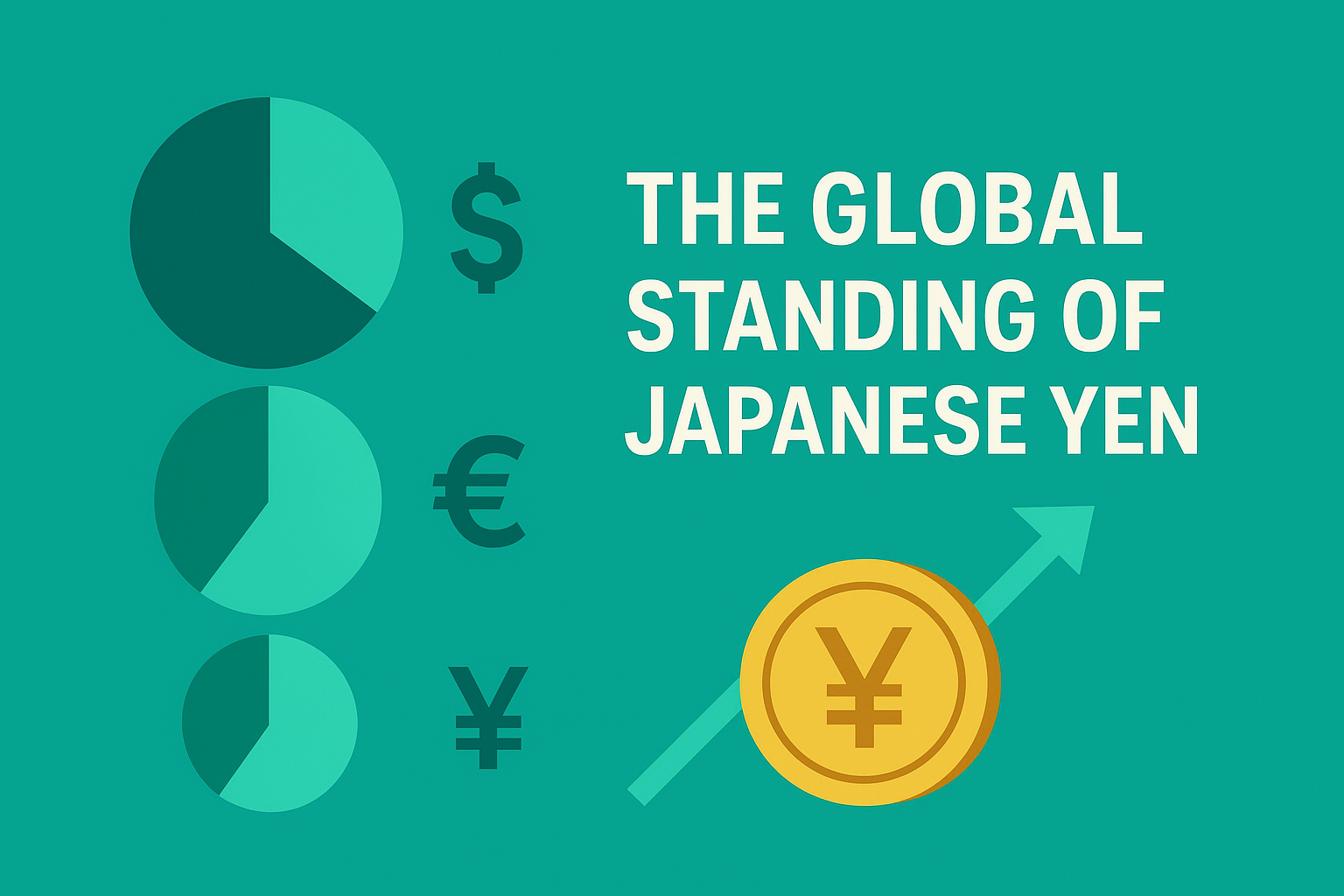
According to IMF COFER data, the yen accounts for approximately 5–6 percent of disclosed global foreign exchange reserves.
This places it behind the US dollar (56–58 percent) and the euro (around 20 percent), and only marginally ahead of other secondary reserve currencies.
While the yen remains important, the international monetary system is undergoing a profound restructuring:
- reduced reliance on the US dollar,
- rising allocations to gold and non-traditional assets,
- geopolitical fragmentation, and
- the gradual advance of alternative payment systems.
Within this shifting environment, the yen is no longer gaining influence — it is struggling to maintain its share.
This backdrop creates powerful structural forces that could push the yen even weaker in the years ahead.
2. Why the Yen’s Reserve Share Has Stagnated — and Why It Is Vulnerable
2.1. Japan’s long-term low-growth, low-rate equilibrium weakens investor appetite
The global influence of a currency ultimately reflects the strength of its economy and the attractiveness of its financial assets.
Japan’s macro profile — low growth, low inflation, and persistently low interest rates — limits the yen’s international appeal.
Key implications include:
- Japanese bonds offer lower yields than global alternatives
- Post-Abenomics inflation momentum has stalled
- Japan’s return on capital lags behind its peers
For reserve managers and private investors alike, yen-denominated assets simply provide less incentive to increase exposure.
2.2. Fiscal fragility undermines confidence
Japan’s gross debt exceeds 260 percent of GDP, the highest among advanced economies.
Although domestic savings and the Bank of Japan mitigate short-term risks, international markets are increasingly aware that:
- the tax base is shrinking due to aging,
- social security costs are rising, and
- Japan’s room for fiscal consolidation is constrained.
This combination erodes the perception of the yen as a risk-free safe haven — a status it enjoyed in the 1980s and 1990s but can no longer rely upon.
2.3. The world is diversifying — but not into yen
As reserve managers reduce dollar concentration, they are reallocating not into the yen but into:
- gold,
- the euro,
- the renminbi, and
- diversified regional assets.
The global diversification trend therefore dilutes the yen’s relative importance rather than amplifying it.
3. Structural Drivers That Could Accelerate Yen Depreciation
The next decade presents several macro-financial conditions that could push the yen lower.
These forces are slow-moving, persistent, and interconnected.
3.1. Global capital flows: the yen as a “funding currency”
Investors increasingly borrow yen at low interest rates and invest in higher-yielding assets abroad.
This “carry trade” dynamic converts the yen into a global funding currency — one that is borrowed and sold rather than accumulated.
The faster global capital rotates through risk cycles, the more the yen becomes structurally sold.
3.2. Interest rate differentials remain a headwind
Even with the Bank of Japan exiting negative rates, its tightening capacity is limited.
Meanwhile, the United States and Europe continue to operate in higher-rate regimes.
As long as:
- Japanese policy rates remain anchored,
- global long-term yields exceed Japan’s,
the yen faces a built-in depreciation bias through prolonged rate differentials.
3.3. Japan’s energy-import dependence magnifies external shocks
As a major importer of fossil fuels and food, Japan’s trade balance deteriorates quickly when commodity prices rise.
Geopolitical tensions — especially in the Middle East — amplify:
- higher import costs,
- trade deficits, and
- yen selling pressure.
This structural vulnerability contrasts sharply with resource-rich economies whose currencies strengthen during commodity price surges.
3.4. A reshaping global monetary order in which the yen is a bystander
The international system is fragmenting:
- alternative payment networks are expanding beyond SWIFT,
- BRICS+ economies are exploring non-dollar settlement,
- gold is regaining prominence as a neutral reserve asset.
In this realignment, the yen is not a core beneficiary.
Its role is neither expanding nor strategically central in emerging monetary blocs.
3.5. Demographics: Japan’s defining long-range currency challenge
Population decline reduces:
- labor supply,
- domestic investment momentum,
- innovation potential, and
- long-term fiscal sustainability.
Currencies ultimately reflect the vitality of the economies behind them.
Japan’s demographic profile imposes a structural drag that no short-term FX intervention can offset.
4. How Far Could Yen Weakness Go?
A Base Case and a Risk Case
4.1. Base case: slow, persistent depreciation
Under current conditions:
- yen’s reserve share remains flat around 5–6 percent,
- rate differentials persist,
- global diversification continues.
The yen likely follows a gradual weakening trend, punctuated by brief rebounds.
4.2. Risk case: accelerated yen depreciation
In a confluence of adverse conditions — such as:
- sustained commodity price shocks,
- widening Japan–US rate differentials,
- markets questioning Japan’s fiscal trajectory,
- accelerating global de-dollarization that bypasses the yen,
- rising attractiveness of gold and renminbi as alternatives —
the yen could weaken sharply, potentially testing levels previously considered extreme (e.g., USD/JPY 180–200).
Such outcomes would not be speculative anomalies but rather the logical culmination of deep structural forces.
5. Conclusion: The Yen Is Entering a New Phase — One Defined by Structural Vulnerability
The evidence points to a clear conclusion:
- The yen’s share of global reserves is modest and stagnant, with no catalyst for expansion.
- The currency’s former status as a safe haven has diminished due to macroeconomic and fiscal realities.
- Japan’s demographic trajectory and low-rate equilibrium create a persistent depreciation bias.
- Global monetary fragmentation reinforces the yen’s marginalization.
- Episodes of sharp yen weakness are increasingly a symptom of structural pressures, not cyclical disruptions.
Simply put, the yen is transitioning from a defensive, wealth-preserving currency into one facing systematic downward pressure.
This is not a short-term market story.
It is a structural narrative shaped by multi-decade forces — one that policymakers, investors, and global institutions can no longer ignore.