Wrote By: Global Economist
Lead
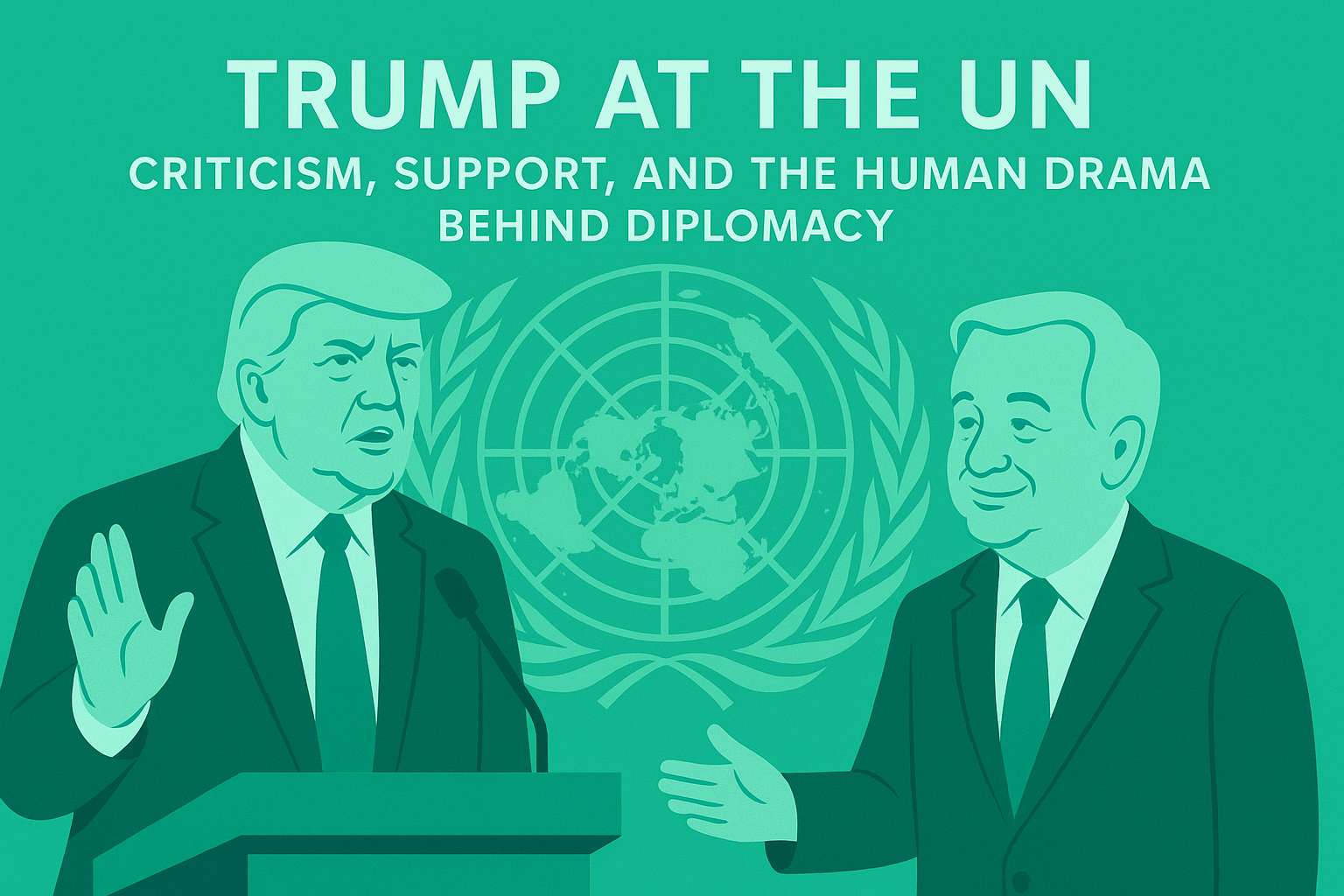
At the United Nations headquarters in New York, President Donald Trump took the podium and delivered a characteristically paradoxical message: “The UN is useless,” he declared—only to add, “We support it 100%.” The hall fell into uneasy silence, diplomats exchanged quick glances, and Secretary-General António Guterres tried to hold a steady smile. Beyond the speeches and applause, the General Assembly revealed its deeper layers of human drama, contradictions, and quiet maneuvers.
1. An Atmosphere of Tension and Expectation
The General Assembly hall was filled with a restless stillness. Delegates shuffled papers, interpreters pressed headsets tightly against their ears, and reporters leaned forward, prepared for every unexpected twist. When Trump opened with, “The UN is useless,” a low murmur swept the hall. Yet his immediate follow-up—“We support it 100%”—froze the room again. This dual message of criticism and endorsement exemplified Trump’s theatrical style: disruptive, contradictory, and impossible to ignore.
2. Guterres’ Tight Smile
After the speech, Secretary-General António Guterres shook Trump’s hand on stage. From afar, his face bore a diplomatic smile. Up close, however, there was tension. Later, in a press briefing, Guterres remarked, “The UN has neither carrots nor sticks. But it remains the only common table we share.” His words sounded less like a statement of power and more like an affirmation of necessity—an attempt to hold together an institution that is both indispensable and under fire.
3. Russia’s Immediate Counterattack
Trump’s jab—calling Russia a “paper tiger”—triggered a swift and deliberate counter. Russian diplomats quickly coordinated talking points, telling state media reporters in bold terms: “We are a bear.” At their press briefing, they emphasized military resilience and economic stability. Every gesture, from dramatic hand movements to confident smiles, was carefully staged to project strength. The performance underscored Russia’s strategy: never concede weakness, especially on the global stage.
4. How Delegates Reacted
- European delegates: Took notes with stern faces, their raised eyebrows betraying frustration at Washington’s contradictions.
- Asian emerging economies: Watched with tense expressions, calculating how shifts in U.S. aid and bilateral deals might reshape their development prospects.
- African representatives: One quietly told reporters, “If the UN is seen as powerless, we lose the only place where our voice matters.”
The hall was charged with silent calculations: Was Trump’s statement a threat, a promise, or both?
5. Inside the Press Room
In the journalists’ workspace, laptops clattered and whispered commentary filled the air.
- A European reporter remarked, “For Trump, the impact on markets matters more than the facts themselves.”
- An Asian journalist quipped, “The UN is no longer just a diplomatic arena. It has become a stage play—and the global financial markets are the real audience.”
This behind-the-scenes chorus revealed a shared cynicism: that the UN, for all its ceremony, is also a theater of power designed as much for external perception as for negotiation.
6. Corridor Conversations: Off-the-Record Diplomacy
Beyond the formal speeches, the UN’s corridors told their own story.
- A Middle Eastern diplomat confided, “U.S. support always comes with conditions. We must negotiate knowing that.”
- An African official worried aloud, “If the UN weakens further, our conflicts will last even longer.”
These hallway conversations captured the essence of the institution: the real deals are often made off-stage, in whispered exchanges between sessions.
7. The Road Ahead
Trump will likely continue his “dual strategy”—undermining the UN rhetorically while using it as a platform for leverage. Guterres will strive to preserve the UN’s fragile legitimacy as the “only common table.” Meanwhile, Russia and China will exploit U.S. ambivalence to promote their own brand of multipolarism.
For smaller states, the question is not whether to trust the UN, but how much to hedge against its decline. The human drama of the General Assembly is thus a mirror of global fractures and shifting alliances.
Conclusion
What unfolded in New York was more than a speech. It was a theater of power: a U.S. president wielding paradox as a weapon, a Secretary-General clinging to the institution’s last strands of unity, great powers fighting over narratives, smaller nations calculating their survival, and reporters reducing it all to headlines.
“The UN may be powerless, but it remains the only stage we have.” The contradiction remains—and it will define the next chapter of global diplomacy.