—Slower Growth Meets Fiscal Expansion—
Date: April 14, 2026
Category: Fixed Income / Sovereign / Fiscal Policy
1. Executive Summary
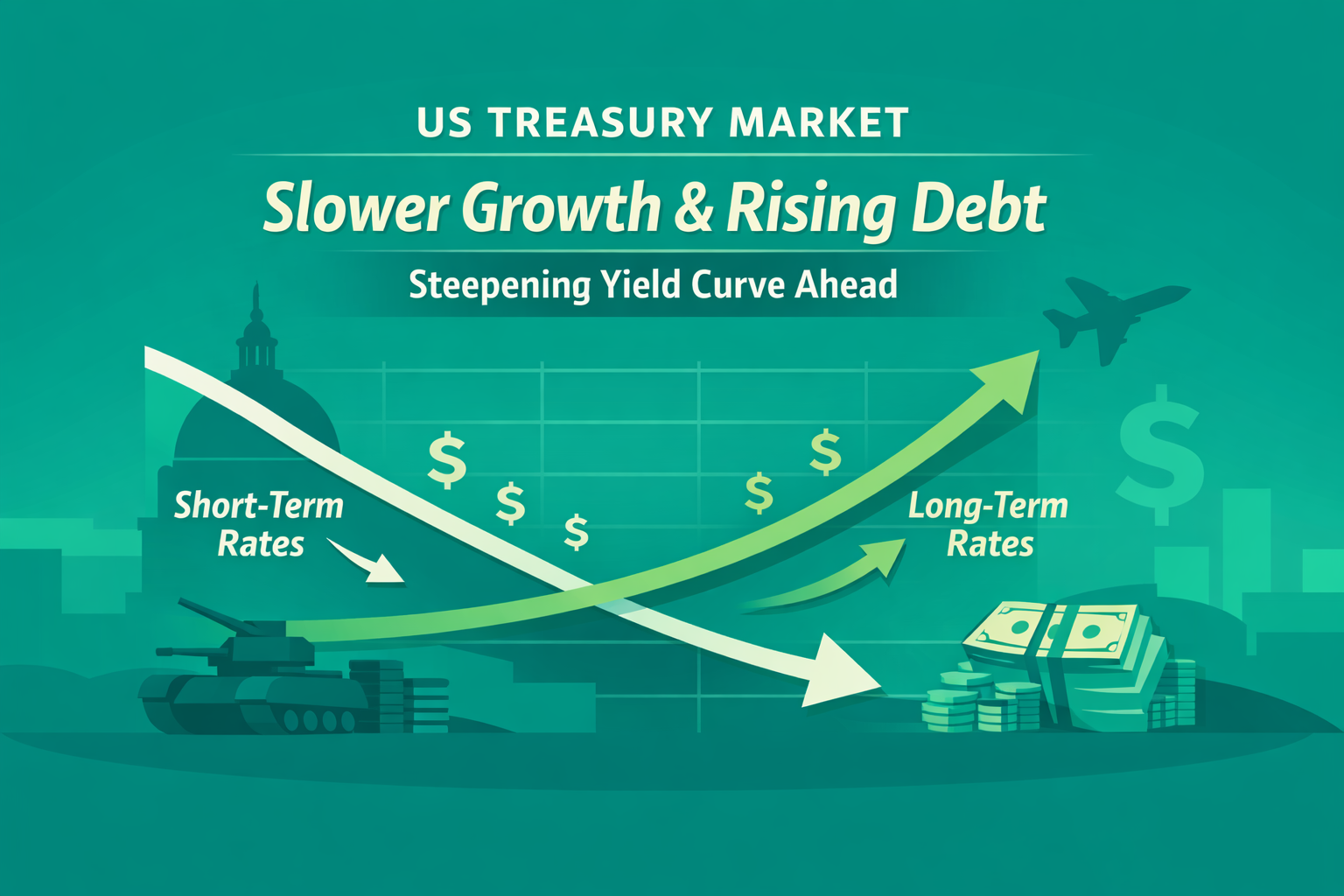
The US Treasury market is increasingly pricing in a steepening yield curve, driven by a simultaneous decline in short-term yields and upward pressure on long-term rates.
This is not a technical market move. It reflects a deeper structural shift:
The coexistence of economic slowdown and persistent fiscal expansion.
While short-term rates are anchored by expectations of policy easing, long-term yields are rising on concerns over expanding deficits, increased defense spending, and higher Treasury issuance.
The implications extend far beyond the US, tightening global financial conditions through higher benchmark yields.
2. Market Structure: A Clear Divergence Across the Curve
The current yield curve dynamic reflects fundamentally different forces at play across maturities.
(1) Front-End (2Y and below): Growth and Policy Expectations
- Slowing economic momentum
- Expectations of renewed rate cuts
- Gradual disinflation narrative
→ Downward pressure on yields
(2) Long-End (10Y and beyond): Fiscal Risk Premium
- Expanding fiscal deficits
- Rising defense expenditures (linked to Middle East tensions)
- Increased Treasury issuance
→ Upward pressure driven by supply and term premium
■ Key Insight
This configuration implies:
A weakening economy coexisting with rising long-term rates.
In other words, long-term yields are increasingly being driven by fiscal dynamics rather than monetary policy expectations.
3. Reframing Geopolitical Risk: From Safe Haven to Fiscal Shock
Historically:
- Geopolitical tensions → flight to safety → lower yields
Now:
- Geopolitical tensions → fiscal expansion → higher long-term yields
Markets are no longer reacting to conflict as a pure risk-off event. Instead, they are focusing on:
The fiscal consequences of prolonged geopolitical engagement.
■ Fiscal Transmission Channels
- Additional defense spending
- Inflationary pressure via energy markets
- Sustained debt accumulation
These factors are being priced into long-duration Treasuries, lifting yields structurally.
4. Global Implications: A Silent Tightening of Financial Conditions
US long-term yields function as the global risk-free benchmark. Their rise has broad spillover effects.
(1) Higher Dollar Funding Costs
- Emerging markets
- Commodity exporters
- Corporates with USD liabilities
→ Increased refinancing risk and credit stress
(2) Deterioration in Investment Economics
- Infrastructure projects
- Energy investments
- Project finance structures
→ Lower IRRs and tighter investment thresholds
(3) Capital Flow Rebalancing
- Shift toward USD-denominated assets
- Reduced appetite for risk assets
→ Heightened volatility in emerging markets
■ Structural Concern
Even if central banks begin to ease policy:
Higher long-term yields may blunt the transmission of monetary easing.
This effectively creates a market-driven tightening environment, independent of central bank actions.
5. Implications for Practice
(1) Repricing of Interest Rate Assumptions
- Long-term USD rates should no longer be assumed to trend lower
→ Adopt a structurally higher rate environment in base cases
(2) Project Finance
- Long construction periods increase exposure
→ Dual risk of higher financing costs and weaker demand
(3) Sovereign and Quasi-Sovereign Exposure
- Countries with limited fiscal space
- High dependence on USD funding
→ Rising vulnerability to external shocks
(4) Structuring Strategy
- Accelerate fixed-rate locking
- Enhance duration management
- Diversify funding currencies where feasible
6. Key Watchpoints
Critical variables to monitor include:
- US Treasury issuance trajectory
- Scale and persistence of defense spending
- Inflation reacceleration risks
- Divergence between Fed policy and long-term yields
Particularly important:
Whether long-term yields continue to rise even as rate cuts begin.
This would confirm a structural shift in market dynamics.
7. Conclusion
The US Treasury market is entering a phase defined by:
Fiscal-driven upward pressure on long-term yields amid slowing growth.
This marks a departure from the conventional cycle and has far-reaching implications for:
- Global funding costs
- Investment decision frameworks
- Risk asset valuations
Going forward, the key strategic adjustment is clear:
Move beyond the assumption of persistently low long-term interest rates.